

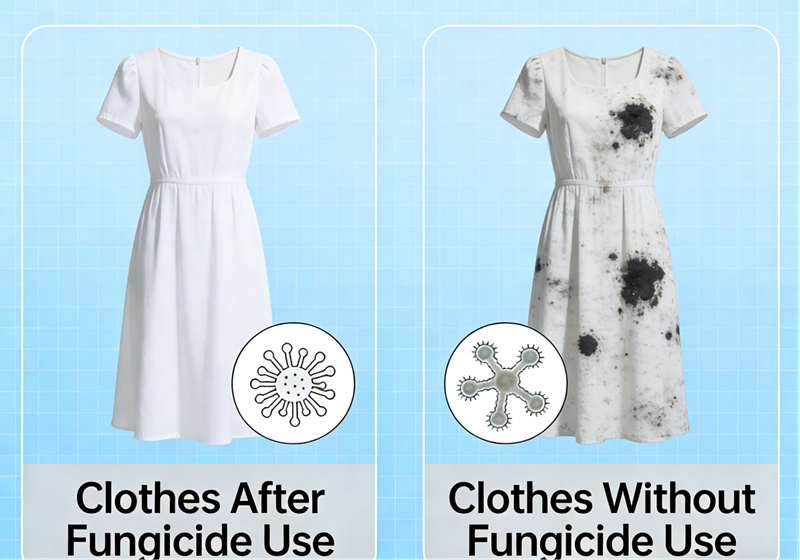
The main purposes of adding bactericides to washing products are twofold: to protect fabrics and to inhibit skin damage caused by bacteria. Currently, the commonly used bactericides in laundry detergents include the following categories:
1. Chlorine-Containing Bactericides
Triclocarban
Due to its broad-spectrum and high-efficiency killing and inhibiting effects on Gram-positive bacteria, Gram-negative bacteria, fungi, yeasts, viruses, etc., it is widely used as a bactericide and preservative in washing products, cosmetics, medical disinfectants, air fresheners, fabric and leather finishing agents, deodorants and other products. Triclocarban has a fast bactericidal speed, is safe and non-toxic, and insoluble in water. Once applied to the skin or fibrous fabrics, it is not easily washed off during rinsing, thus continuously exerting bactericidal and bacteriostatic effects. As an anionic bactericide, triclocarban has good compatibility and stability in detergents, is stable to light and heat, will not cause product discoloration, nor stain clothes and skin. Tests have shown that the addition of triclocarban has no significant impact on the detergency and foaming power of liquid detergents, and has good high and low temperature stability. It has good compatibility and stability with the alkaline medium commonly used in soap bases, so it is particularly suitable for washing products such as soaps, body washes, shampoos, washing powders, laundry detergents and hand washes.
Triclosan
Triclosan, with the scientific name “2,4,4′-trichloro-2′-hydroxydiphenyl ether” and the chemical formula C₁₂H₇Cl₃O₂, is also known as “triclosan”. Under normal conditions, it is a white or off-white crystalline powder with a slight phenolic odor. Insoluble in water, easily soluble in alkaline solutions and organic solvents, it has a broad spectrum of killing and inhibiting effects on pathogenic Gram-positive bacteria, fungi, yeasts and viruses (such as hepatitis A, hepatitis B, rabies virus, HIV). It is non-irritating to the skin and equally effective against antibiotic-resistant and non-resistant bacteria.
As a broad-spectrum bactericide, triclosan is widely used in high-efficiency medicinal soaps/sanitary soaps, sanitary lotions, deodorant/foot odor sprays, disinfectant hand washes, wound disinfection sprays, medical device disinfectants, facial cleansers/creams, air fresheners and refrigerator deodorants. It is also used for the finishing of sanitary fabrics and the anti-corrosion treatment of plastics. Higher purity triclosan is widely used in therapeutic toothpastes and mouthwashes for treating gingivitis, periodontitis and oral ulcers, with a recommended usage concentration of 0.05% to 0.3%.
Diclosan
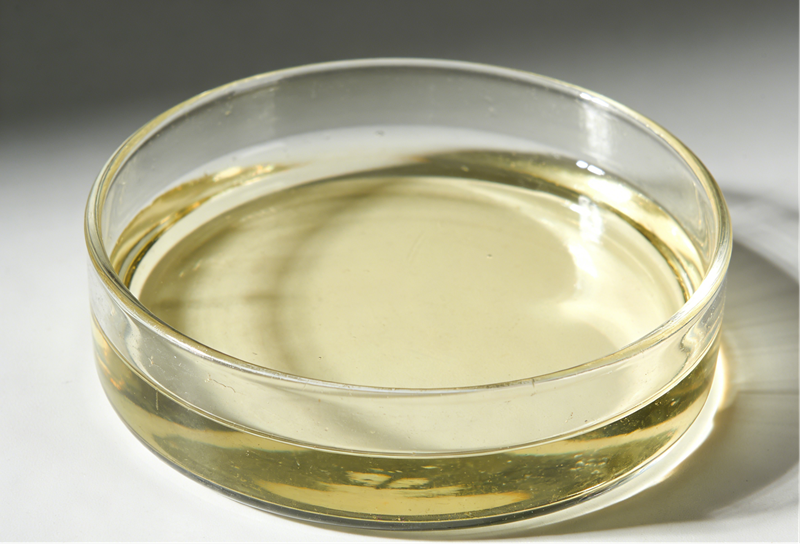
Its chemical name is 4,4′-dichloro-2-hydroxydiphenyl ether, abbreviated as Diclosan DB-100. Under normal conditions, it is a pale yellow liquid. Insoluble in water, soluble in organic solvents and surfactant solutions, it can be compounded with anionic, non-ionic, amphoteric and cationic surfactants, with heat resistance up to 200°C and excellent stability in alkaline environments. Diclosan DB-100 is a safe and efficient broad-spectrum bactericide, which has a good inhibitory effect on both Gram-positive and Gram-negative bacteria. It is suitable for household and fabric care products, kitchen utensils or hard surface cleaning. It can be used together with active bleach during cleaning, but is unstable when stored for a long time in strong oxidizing (active bleaching) systems. The recommended addition amount in laundry detergents is ≤ 0.6%.
Currently, many antibacterial products on the market contain triclosan and triclocarban. Some studies cited by the U.S. Food and Drug Administration (FDA) indicate that long-term exposure to certain active ingredients in antibacterial products, such as triclosan and triclocarban, may affect human drug resistance or hormone levels, posing health risks. This news has cast a psychological shadow on consumers’ perception of the safety of triclosan and triclocarban, reducing their acceptance of such products. Since diclosan has one less chlorine atom than triclosan, it is less irritating to the human body and thus has a tendency to replace triclosan.
2. Phenolic Bactericides
Chloroxylenol (PCMX)
Its chemical name is 4-chloro-3,5-dimethylphenol, abbreviated as PCMX. It is a high-efficiency, safe and broad-spectrum bactericide. It has killing effects on most Gram-positive, negative bacteria, fungi and molds, is non-irritating, and is a low-toxicity antibacterial agent. It can be widely used as a mildew and antibacterial agent in disinfection or personal care products, such as anti-dandruff shampoos, hand washes, soaps and other antibacterial detergents. Approved by the U.S. FDA, PCMX is the preferred bactericidal agent with a minimum concentration of 0.5%, and can be diluted with water at a ratio of 1:120 when used. Chloroxylenol is incompatible with non-ionic surfactants and methylcellulose. Currently, many disinfectants or antibacterial laundry detergents on the market have added this bactericide.
2,4-Dichloro-3,5-dimethylphenol (DCMX)
DCMX is a grayish-white or pale yellow acicular or crystalline powdery solid with a special odor, a melting point of 92-95°C, difficult to dissolve in water, and easily soluble in alcohols such as ethanol, isopropanol, glycerol and other organic solvents. It is a high-efficiency, broad-spectrum and strong antimicrobial agent. This product has strong killing and inhibiting effects on more than 10 kinds of pathogenic microorganisms, and is widely used in civil or special disinfectant fields, as well as mildew prevention in the leather industry.
During the use of phenolic disinfectants, their bactericidal components are insoluble in water, making it easy to form phenol during use. Phenol is a globally recognized highly carcinogenic substance, which causes serious environmental pollution and poses certain risks in use.
3. Others
2-Phenoxyethanol (EPH/EP)
2-Phenoxyethanol, also known as ethylene glycol monophenyl ether or phenoxyethanol, is a popular broad-spectrum bactericide internationally. It has the characteristics of high efficiency, safety, low toxicity, non-irritation and no pollution, and can be used for anti-corrosion and sterilization in medicine, cosmetics, household washing products, as well as disinfection and preservation of wet wipes and cosmetics. 2-Phenoxyethanol has a long history of wide and good use, is safe and non-irritating to the human body, can effectively control bacteria, yeasts and molds, and has obvious synergistic effects when used with other bactericidal active ingredients. As a non-ionic bactericide, EPH has good compatibility and stability in formulas, and can be applied in a wide pH range (pH 2-12). It also has good compatibility and stability in the alkaline medium commonly used in soap bases, and is used as a common and highly effective bactericide and deodorant in European and American countries.
If you have requirements for washing bactericides, feel free to contact us at any time.
Post time: Jan-25-2026