

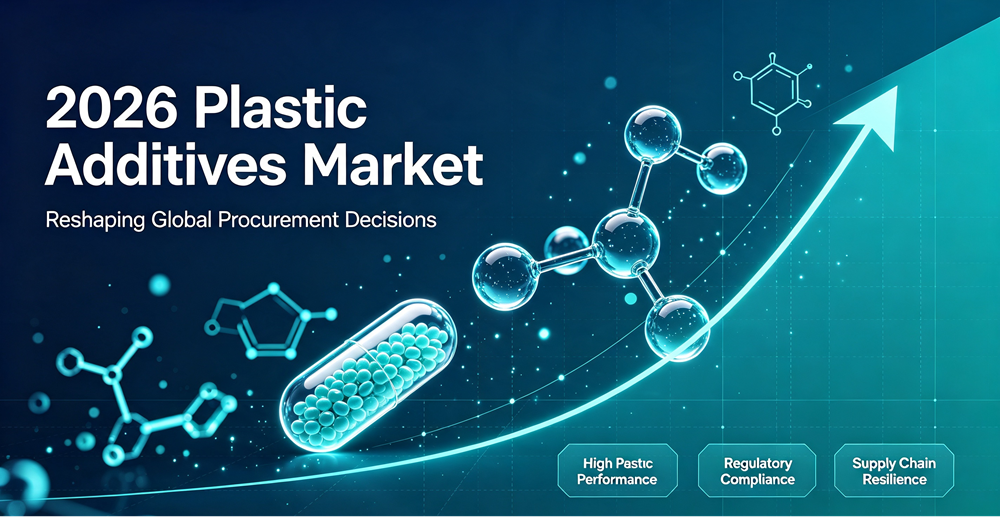
The global plastic additives market is entering a new growth phase. According to recent industry forecasts, the market is expected to expand from around USD 62.8 billion in 2026 to over USD 94.3 billion by 2036, at a compound annual growth rate of approximately 4.2%. That steady climb is not happening in a vacuum. It is being driven by three overlapping forces: rising demand for high-performance polymers, tighter global regulations, and a sourcing landscape that is forcing buyers to think harder about supply-chain resilience.
For compounders, masterbatch producers, and brand owners, the message is clear: additive selection is no longer just a cost decision. It is a performance, compliance, and risk-management decision. Here is what global buyers should be watching in the second half of 2026.
1 Performance Under Pressure: Durability Is the New Baseline
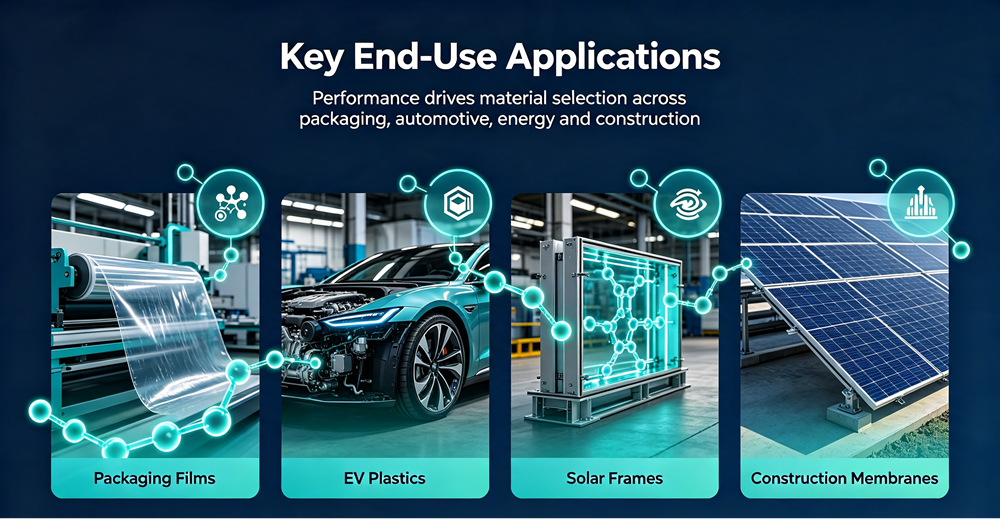
End-use industries are asking more from plastic materials than ever before. Packaging must extend shelf life while using thinner films. Automotive components must survive higher under-hood temperatures as electrification accelerates. Outdoor products, from solar frames to construction membranes, must resist UV degradation for years without yellowing or embrittlement.
This is where the right additive package becomes a competitive advantage:
- Antioxidants protect polymers during high-temperature processing and long-term service life, preventing thermal oxidative degradation and discoloration.
- UV absorbers and light stabilizers are essential for outdoor and transparent applications, blocking or dissipating harmful UV radiation before it breaks polymer chains.
- Optical brighteners enhance the visual appeal of white and colored plastics, improving perceived quality in packaging and consumer goods.
- Nucleating agents improve crystallization behavior, giving polypropylene and other semi-crystalline polymers better clarity, stiffness, and faster cycle times.
At Nanjing Reborn New Materials, we see this every day in customer formulations: a small adjustment in the stabilizer package can mean the difference between a product that meets specification and one that fails in the field.
2 Compliance Is Moving Faster Than Ever
Regulatory pressure is no longer limited to Europe. In 2026, multiple jurisdictions are tightening restrictions on legacy chemistries:
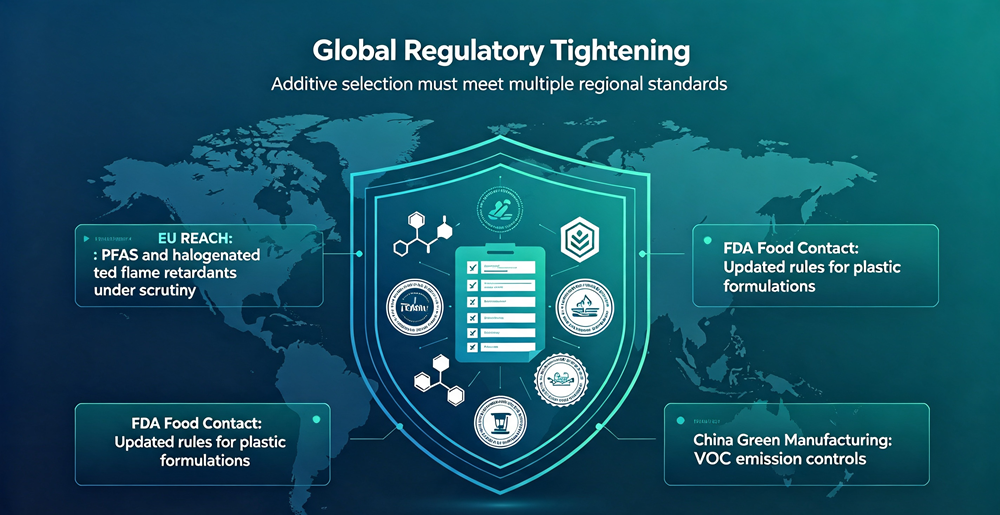
- The EU continues to expand REACH restrictions, with increased scrutiny on PFAS-containing processing aids and certain halogenated flame retardants.
- The U.S. FDA updated indirect food-additive regulations in March 2026, affecting polymer formulations intended for food-contact applications.
- China’s green manufacturing standards for plastic processing additives are pushing the industry toward cleaner production and lower VOC emissions.
For exporters and global brands, this means additive choices must be validated not only for performance but also for regulatory alignment across multiple markets. Working with a supplier that understands these evolving requirements and can support documentation, technical data sheets, and consistent batch quality is becoming a strategic necessity.
3 Supply Chains Are Being Redesigned for Resilience
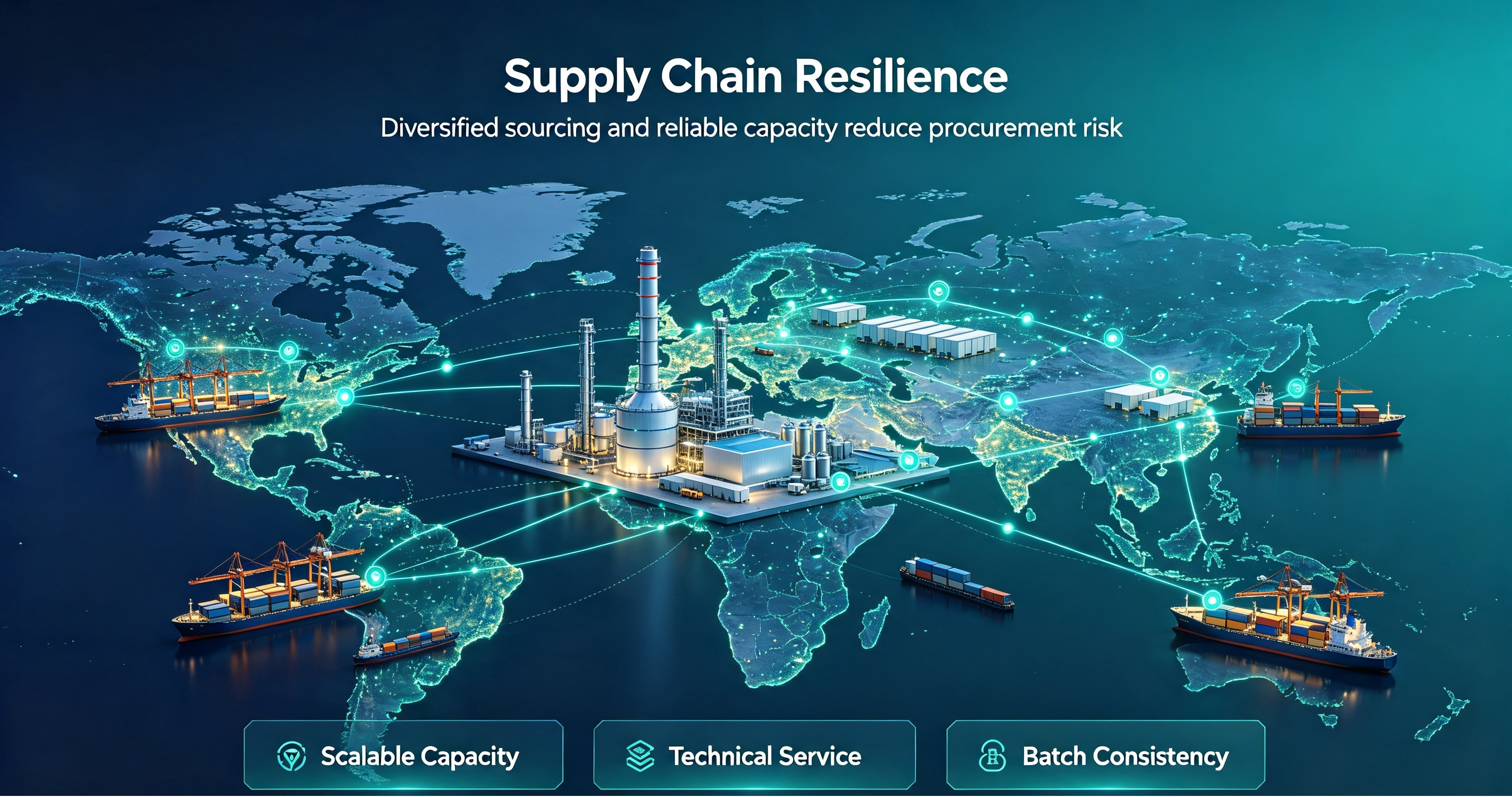
The past few years have taught the polymer industry that supply-chain reliability is as important as price. Geopolitical uncertainty, shipping cost volatility, and regional production constraints have made many buyers reconsider single-source dependencies. As a result, more companies are diversifying their additive sourcing and looking for partners with stable manufacturing footprints and strong technical service capabilities.
Asia-Pacific remains the largest regional market for plastic additives, supported by deep downstream capacity in packaging, automotive, electronics, and construction. China, in particular, continues to play a central role as both a producer and exporter of polymer additives, while also upgrading its domestic standards and consolidating smaller producers under stricter environmental rules.
This consolidation is creating a two-tier market: suppliers with compliant, scaled, and technically capable operations are gaining share, while smaller, non-compliant producers are being pushed out. Buyers who understand this shift can secure better long-term supply stability by qualifying the right partners now.
What to Look for in an Additives Partner
Whether you are reformulating for sustainability, qualifying a new supplier, or simply trying to improve the cost-performance balance of your polymer compound, the right partner should offer more than just a product. Look for:
- Application technical support to match additives to your resin system and processing conditions.
- Consistent quality with reliable batch-to-batch performance and full documentation.
- Regulatory awareness to help navigate REACH, FDA, and other regional requirements.
- Flexible supply with responsive logistics and transparent communication.
How Nanjing Reborn New Materials Can Help
Nanjing Reborn New Materials Co., Ltd. is a China-based supplier of polymer additives serving customers in plastics, coatings, inks, rubber, and electronics. Our product portfolio includes optical brighteners, UV absorbers, light stabilizers, antioxidants, nucleating agents, and specialty additives.
Contact us to request technical data sheets, samples, or a tailored additive recommendation for your application.
Post time: Aug-08-2026