

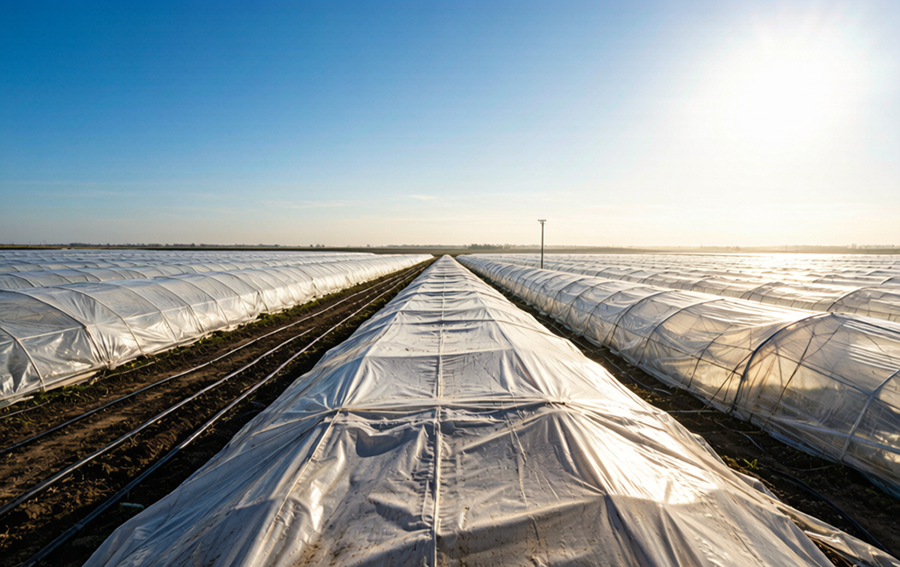
Outdoor plastic products face a relentless enemy: ultraviolet radiation. Whether it is agricultural film stretched across hectares of farmland, automotive interior trim exposed to dashboard heat, or construction geomembranes baking under tropical sun, UV light initiates a chain reaction that leads to discoloration, surface cracking, and catastrophic loss of mechanical strength. For manufacturers, the cost of premature failure is not just material waste—it is warranty claims, brand damage, and lost customer trust.
Many formulators already understand the value of UV absorbers. These additives act like chemical sunglasses, absorbing high-energy UV photons and converting them into harmless heat. But here is a truth that surprises even experienced compounders: UV absorbers alone are often insufficient for long-term outdoor durability. To build truly weather-resistant plastics, you need a second line of defense—Hindered Amine Light Stabilizers, commonly known as HALS.
The Limitation of UV Absorbers: Why One Layer Is Never Enough
UV absorbers function by a simple mechanism: they capture UV photons before those photons can reach and break the polymer chains beneath. Benzotriazoles (such as UV-326 and UV-328), benzophenones (such as UV-531), and triazines (such as UV-1164) are all effective at this task. In transparent or thin-section applications like clear coatings, films, and automotive glazing, UV absorbers perform admirably because UV light passes through the entire material thickness.
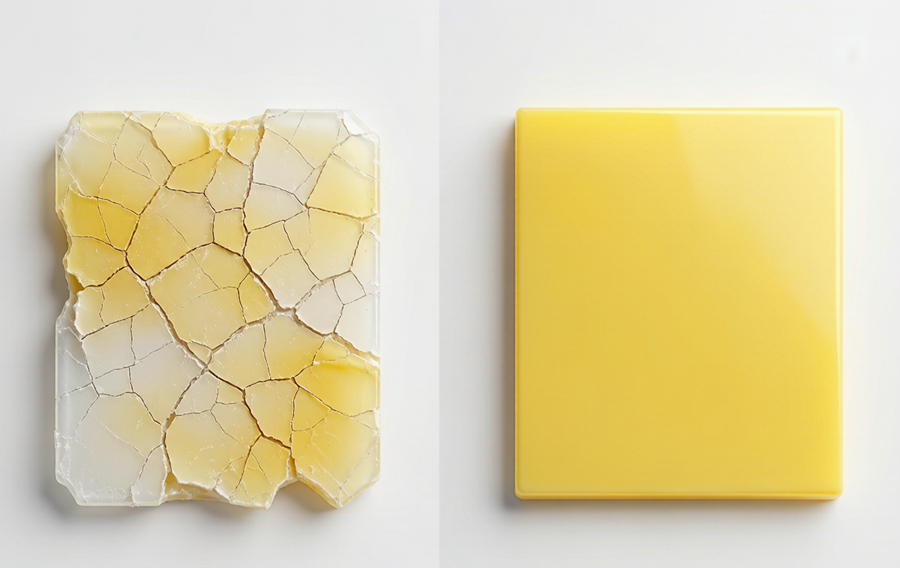
But the protection model of UV absorbers has two inherent weaknesses:
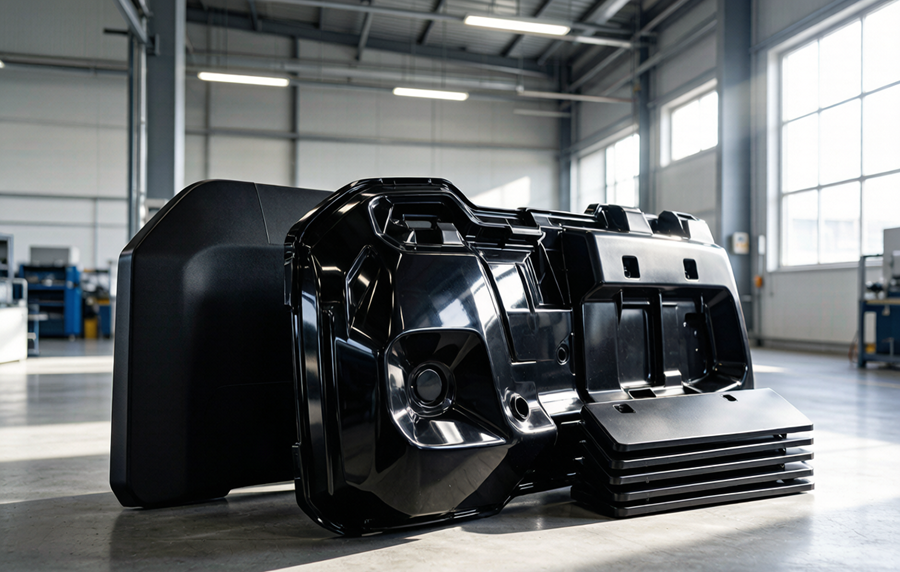
- Depth-dependent protection: UV absorbers rely on the Beer-Lambert principle: protection fades with depth. In thick or opaque sections—think PE pipes, PP battery cases, or molded automotive bumpers—the interior polymer receives little to no protection because the additive near the surface absorbs most of the radiation.
- Depletion over time: During long-term outdoor exposure, UV absorbers can gradually be consumed, volatilize, or be extracted by water and solvents. Once the surface layer is depleted, the unprotected polymer beneath is fully exposed.
- No radical scavenging: UV absorbers cannot neutralize the free radicals that have already been generated inside the polymer matrix. If a UV photon does slip through and breaks a polymer chain, the resulting free radicals trigger a self-sustaining oxidation cascade.
This is where HALS step in. Rather than simply blocking UV light, HALS actively interrupt the degradation process at the chemical level.
How HALS Work: The Regenerative Protection Mechanism
Hindered Amine Light Stabilizers operate through a completely different—and far more powerful—mechanism. Instead of absorbing UV energy, HALS scavenge the free radicals and hydroperoxides that form when polymers are exposed to light and oxygen. The chemistry is elegant: the hindered amine group is oxidized to a nitroxyl radical, which then reacts with polymer-derived alkyl radicals to form stable species, effectively terminating the degradation chain reaction.
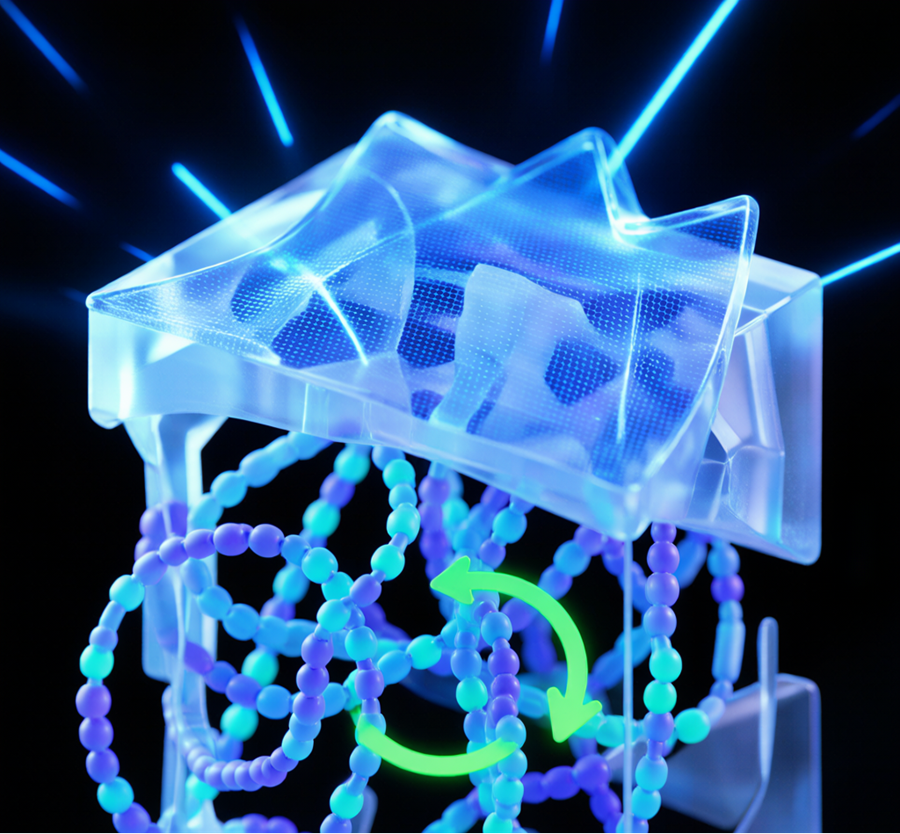
Key Characteristic: What makes HALS truly exceptional is their regenerative nature. The nitroxyl radical is not consumed in a single reaction; it cycles back to an active form and continues scavenging radicals repeatedly. A single HALS molecule can neutralize thousands of degradation events before it is finally exhausted.
This gives HALS an effective concentration efficiency that no UV absorber can match, especially in the bulk of thick or pigmented parts where UV absorbers cannot reach. In practical terms, this means:
- Extended service life: HALS continue protecting the polymer long after UV absorbers would have been depleted.
- Bulk protection: HALS protect the entire cross-section of thick parts, not just the surface.
- Compatibility with opaque systems: HALS are equally effective in pigmented, filled, and opaque formulations where UV absorbers provide minimal interior coverage.
The Synergy: UV Absorber + HALS = Complete Protection
For outdoor applications demanding the highest durability, the industry-standard approach is not to choose between UV absorbers and HALS, but to combine them. The two additive classes work synergistically:
- UV absorbers absorb UV photons at the surface and in transparent layers, reducing the total radical load entering the material.
- HALS capture the radicals that inevitably form despite the UV absorber layer, preventing oxidation from propagating through the bulk.
This combination is the reason why premium automotive exterior parts, greenhouse films rated for five-year service life, and outdoor furniture with decade-long warranties all specify a dual stabilizer package. It is not over-engineering; it is the only proven way to achieve both surface and bulk protection simultaneously.
Selecting the Right HALS for Your Application
Not all HALS are interchangeable. Molecular weight, compatibility with the base resin, volatility, and resistance to extraction all influence performance. Below is a practical guide to matching HALS chemistry with common applications, based on commercially available grades:
| HALS Grade | CAS Number | Characteristics & Ideal Applications |
|---|---|---|
| LS-119 | 106990-43-6 | A high-molecular-weight oligomeric HALS with excellent thermal stability and low volatility. Ideal for PP, PE, PVC, PU, PA, PET, PBT, PMMA, POM, and agricultural films requiring multi-season durability. |
| LS-622 | 65447-77-0 | An oligomeric HALS optimized for polyolefin films, fibers, and tapes. Its low migration and excellent compatibility make it the workhorse of agricultural film and woven sack applications. |
| LS-770 | 52829-07-9 | A lower-molecular-weight monomeric HALS offering outstanding compatibility with PP, HDPE, PU, PS, and ABS. Often the first choice for thin-section injection molding and rotational molding where rapid dispersion is critical. |
| LS-944 | 70624-18-9 | A high-performance oligomeric HALS with exceptional resistance to pesticide interaction and acidic environments. The preferred grade for greenhouse films, mulch films, and geomembranes exposed to agricultural chemicals. |
| LS-783 | Blend | A synergistic blend of LS-622 and LS-944, combining the film-processing benefits of oligomeric HALS with the chemical-resistance advantages of LS-944. Designed specifically for PP and PE agricultural films. |
| DB75 / DB117 | Liquid HALS | A liquid HALS system developed for flexible and rigid polyurethane applications, including microcellular foams, coatings, and elastomers. Its liquid form allows easy incorporation into polyol systems without dusting or dispersion issues. |
When selecting a HALS, always consider the full service environment: temperature extremes, contact with chemicals or solvents, film thickness, and the presence of pigments or fillers. A HALS that performs perfectly in a black PP bumper may not be the right choice for a transparent TPU medical tube.
Conclusion: Build Durability into the Design
UV degradation is not a surface problem—it is a bulk problem that starts at the surface. Relying solely on UV absorbers leaves the interior of thick or opaque plastic parts vulnerable to the slow, invisible creep of photo-oxidation. HALS close this gap by providing regenerative, depth-independent radical scavenging that extends product life far beyond what UV absorbers can achieve alone.
For compounders and brand owners, the takeaway is straightforward: if your product will see sunlight, specify both a UV absorber and a HALS. The modest incremental cost of the dual package is repaid many times over in reduced warranty exposure, higher customer satisfaction, and the competitive advantage of genuinely long-lasting products.
Nanjing Reborn New Materials Co., Ltd. supplies a comprehensive range of UV absorbers, light stabilizers (HALS), antioxidants, and specialty polymer additives for plastics, coatings, inks, and rubber applications worldwide. Contact us for technical data sheets, formulation guidance, and samples tailored to your resin system and processing conditions.
Post time: Aug-05-2026