

Nanjing Reborn New Materials Co., Ltd. · Technical Bulletin · November 2026
PET, PBT and polyester-based TPU all fail by the same route when heat and moisture arrive together: water attacks the ester and carbamate carbonyls, and every chain scission releases a fresh carboxylic acid end group that accelerates the next scission. Not gradual wear but a self-amplifying cascade that collapses molecular weight, intrinsic viscosity (IV) and elongation long before a part looks damaged. Carbodiimide for PET hydrolysis resistance removes that acid fuel at its source; this bulletin gives the mechanism, the dosage logic and a PCT / 85 °C 85 % RH protocol any customer laboratory can repeat.
Figure 1. Monomeric aromatic carbodiimide DB7000 — white to pale yellow crystalline powder (illustrative image)
Hydrolytic Degradation Pathways in PET and TPU
PET hydrolysis is a reversible esterification pushed forward by water ingress into a hygroscopic melt or molded part. Above the glass transition (≈78 °C for amorphous PET), chain-end mobility and water diffusion rise sharply and the equilibrium shifts decisively toward scission. Polyester-polyol TPU follows the same chemistry in its soft segment, where urethane linkages also hydrolyze and release further acidic fragments.
Two regimes matter to any specification writer. In the melt, residual moisture is a reactant: PET processed above 50 ppm moisture at 270–290 °C loses IV in a single pass, hence dew-point drying at −40 °C. In service, absorbed moisture plus thermal load performs the same reaction over months — the domain where TPU hydrolysis resistance and polyester film durability are actually won or lost. Both regimes yield to the same countermeasure, a reduced carboxylic acid population, which is why specialty hydrolytic stabilizers are specified across film, monofilament and molding compounds. Scope is deliberately narrow: polyester (PET, PBT) and polyester-polyol polyurethane systems.
Carboxylic End-Group (-COOH) Autocatalytic Cascade
One hydrolysis event consumes one ester bond and generates one carboxylic acid plus one hydroxyl end group:
The acid is no inert bystander. It protonates the carbonyl oxygen of a neighboring ester, raising the electrophilicity of that carbon and lowering the activation energy for the next water attack — general acid catalysis.
Because f([COOH]) increases monotonically, degradation has no natural plateau. Acid value is the leading indicator: carboxyl titration flags embrittlement weeks before tensile testing does. The cascade is history-dependent: a 35 mmol/kg lot degrades faster than a 20 mmol/kg lot. And recycled streams are the worst case — each thermal history adds acid ends.
Impact on Mechanical Retention
| Metric | Hydrolysis effect | Commercial consequence |
|---|---|---|
| IV | Falls progressively, no recovery | Drives tentering and draw stability |
| MFI | Rises as chains shorten | Lower melt strength, changed die swell |
| Tensile strength | Declines late | False reassurance if read alone |
| Elongation | Falls first and fastest | Real failure predictor |
| YI | Rises with oxidation by-products | Cosmetic rejection |
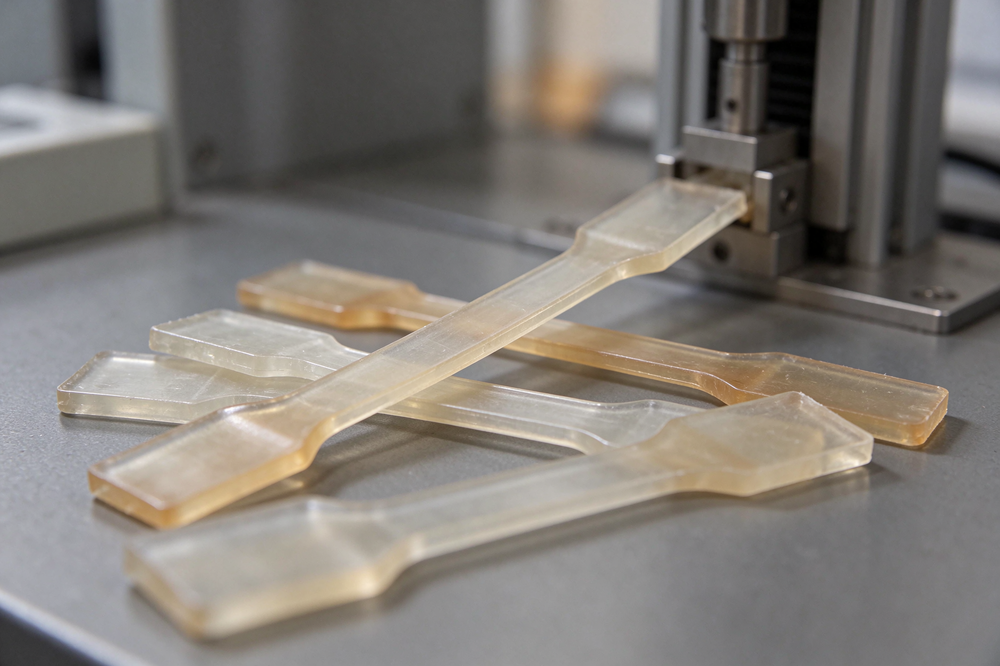
Figure 2. ISO 527 type 1A specimens conditioned for tensile and elongation retention testing (illustrative image)
Mechanism of Monomeric Carbodiimide Stabilizer DB7000
Chemical Structure: Sterically Hindered Aromatic Monomeric Carbodiimide
DB7000 is N,N′-bis(2,6-diisopropylphenyl)carbodiimide (CAS 2162-74-5). Two structural features define its behavior. The 2,6-diisopropyl substituents sterically shield the cumulated bonds from self-addition. Second, the conjugated aryl–NCN–aryl system pairs a high reaction rate with good compatibility in polyester and polyurethane melts, decisive for fine-denier monofilament and thin cast film.
For the broader chemistry, see our carbodiimide mechanism overview; grade-specific data sit on the Stabilizer DB7000 product page.
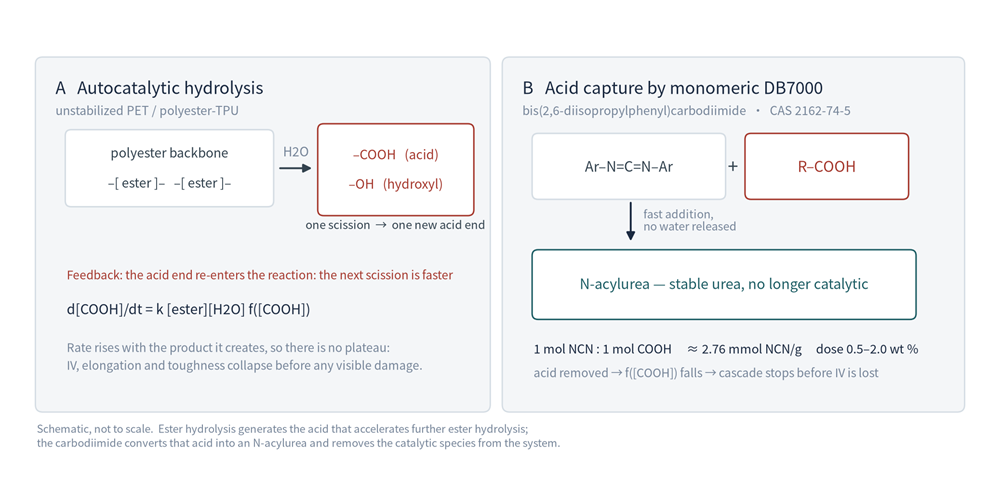
Figure 3. Acid-end feedback in unstabilized polyester versus acid capture by the monomeric carbodiimide
Recommended Dosage Windows (0.5%–2.0%)
| Substrate | Typical COOH | Stoichiometric | Recommended |
|---|---|---|---|
| PET film grade | 25 mmol/kg | 0.91 % | 0.8–1.2 % |
| PET monofilament | 18 mmol/kg | 0.65 % | 0.6–1.5 % |
| Recycled PET | 35–45 mmol/kg | 1.27–1.63 % | 1.2–2.0 % |
| Polyester TPU | 0.4–0.8 mg KOH/g | 0.26–0.51 % | 0.7–1.5 % |
Standardized Hydrolysis Resistance Testing
| Condition | PCT (Autoclave) | Damp Heat 85/85 |
|---|---|---|
| Parameters | 121 °C, 2 bar, saturated steam | 85 °C / 85 % RH |
| Duration | 24 / 48 / 72 / 96 h | 250 / 500 / 700 / 1000 h |
| Objective | Screening and ranking | Field qualification |
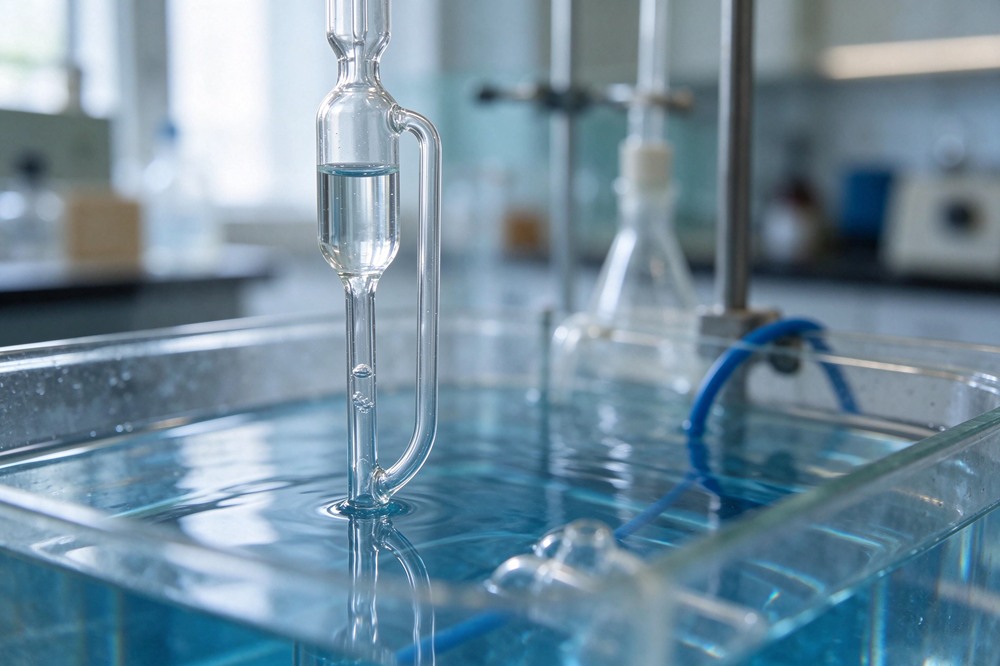
Figure 4. Capillary viscometer in a thermostatic bath — the instrument behind the IV retention gate
Technical Sourcing & Trial Lot Evaluation
Verify: active NCN content (assay ≥98%), identity (CAS 2162-74-5), residual free isocyanate (≤0.1%), and moisture. Trial lots are matched to the substrate; send resin grade, baseline IV, carboxyl value, and processing route.
Summary
Carbodiimide for PET hydrolysis resistance is not a barrier but stoichiometric acid removal, effective only when the dose matches the resin’s actual carboxyl population. DB7000, a sterically hindered aromatic monomeric carbodiimide, delivers ≈2.76 mmol NCN/g with melt mobility suited to thin film and fine monofilament, converting carboxyl ends into stable N-acylureas and stopping the autocatalytic cascade before IV and elongation are lost.
Nanjing Reborn New Materials Co., Ltd. — specialty stabilizers for polyester and polyurethane systems. Data herein are qualification starting points, not release specifications.
Post time: Nov-20-2026